

Social media has had an influx of hashtags such as #TeamNatural, #Afro and #HairGrowthJourney. Thousands of women all over the globe share selfies of their natural hair journeys captioned with the above hashtags, particularly on Instagram.
There are countless Instagram pages and YouTube channels dedicated to the sharing of knowledge about how to keep one’s hair natural and healthy as well as which products are best to use. This movement has been so significant that market research firms predict that the relaxer industry’s sales will see a 45% decrease by 2019.
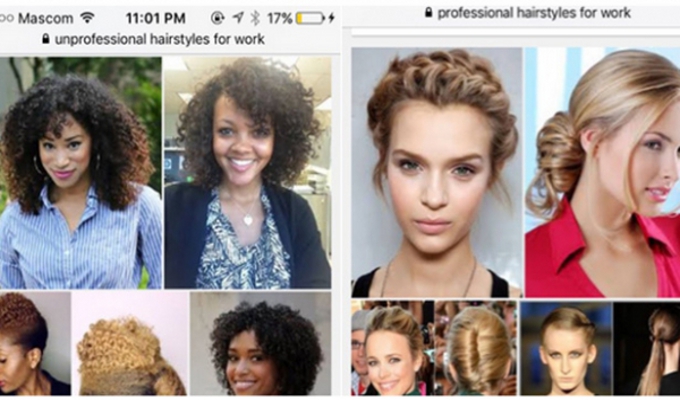
These women are women of colour who for centuries have been told that natural hair equates to untidiness and ugliness with the use of adjectives such as ‘nappy’ or ‘kinky’. The image in this article is an example of the blatant nature of the narrative of blackness being associated with what is socially unacceptable or inappropriate. For centuries there has been a single archetype of beauty where women are concerned which is the stereotypical European female archetype. This has resulted in years of subliminal and sometimes overt stigmatisation of blackness and all it entails, particularly when it comes to the standards of beauty for black women.
Chris Rock’s 2009 documentary ‘Good Hair’ was an exploration into the world of hair for women of colour in the United States. The documentary considered how the emphasis put on hair is rarely ever just about its aesthetic appeal. This documentary also explored what women of colour all over the USA defined as ‘good hair’. More often than not good hair was considered to be the stereotypical European model of beauty, straight sleek hair.
Regardless of geographic location, culture and race, hair is a deeply personal subject for many women. From a young age we are told that our hair is our crown and that we should take care of it. For women of colour, this narrative goes much deeper. The state of your hair is perceived as a reflection of who you are and how well you are doing. Hair is personal, political and very much tied to a woman of colour’s identity.
The #TeamNatural phenomenon is one that we all should be celebrating, regardless of how one chooses to wear their hair. It is not about shaming women who choose not to wear their hair naturally. It is about taking back the power to choose and not be forced through being socially shamed. It is time to stop conforming to an unrealistic and unattainable archetype of beauty that has resulted in the self-loathing of thousands of women of colour all over the world. #TeamNatural represents the redefining of beauty, one that includes more than one skin tone and more than one body shape. It represents a generation of women who choose to teach the world how to love them by leading by example. I don’t know if the #TeamNatural movement is here to stay but I really hope it is.
Written by: Cindy Fumbata
